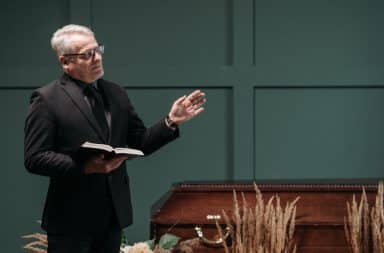
It is with heavy hearts that we announce the passing of the 90-minute movie on October 8, 2025, succumbing to a long illness in an area just outside of Atlanta, GA, that could pass as the American south, west, midwest and even the northeast, if absolutely needed. Born in Hollywood, CA, the origins of the 90-minute movie may be up for some debate, though 1919’s risque love triangle-drama Blind Husbands serves as one of the earliest examples of the genre, making it about 106 years old at the time of its passing.
Cherished by all who experienced it, the 90-minute movie entertained audiences with a well-told tale that did not require one clear an entire day to watch it. While it may have never become ubiquitous, the 90-minute movie saw its popularity repeatedly rise and fall throughout its lifetime. Though, regardless of the filmmaking trends of the time, from the long shots and lens flares to the split screens and star wipes, the 90-minute movie remained 90 minutes.
While the 90-minute movie was notoriously versatile throughout its career, it is perhaps most associated with the comedy and horror genres, with beloved classics like Frankenstein and Airplane serving as evidence of a life well-lived. However, recent years saw both genres eschew tightly-constructed narratives for more “elevated” and indulgent stylings, leading to a cinematic bloat. Nevertheless, whenever a 90-minute film debuted, it brought unbridled joy, with audiences often noting how great it was to be able to drink an entire soda without the risk of missing key plot details while using the restroom.
The 90-minute movie was preceded in death by the short silent films that came about in the late 19th and early 20th centuries. Pioneering works like Lumiere brothers’ 1896 L’Arrivée d’un train en gare de La Ciotat, roughly translated as “What the Hell Is That Train Doing?!?” and Robert’s Weine’s 1920 The Cabinet of Dr. Caligari—films that laid the foundation for an artform, daring filmmakers to ask, “What if these puppies had sound and were longer?”
It is survived in death by the this-assuredly-shouldn’t-be-more-than-two-hours Netflix streamer and the three-hour prestige-Oscar-play-picture directed by a guy in his 80s that lost the studio $100 million. And of course, the modern superhero movie. For specific examples, look no further than the highest grossing films of the past decade, all of which feature chiseled actors named Chris.
For donations, support the 90-minute directorial efforts of Akiva Schaffer (Hot Rod, Pop Star, and The Naked Gun reboot), who alone seems to understand the filmmaking concept of “less is more,” having honed his comedic chops at the notoriously time-constrained Saturday Night Live.
In lieu of flowers, go to your local theater and scan the releases for a new release that’s close to 90 minutes. It’ll probably be something you’ve never heard of—just as at one time or another films like, Halloween and This Is Spinal Tap were unknown by audiences. Then, buy a ticket, settle in your seat, and take solace in the fact that whether you like the film or not, whether it’s something unforgettable or a total dud, that you’ll emerge from the theater in an hour and a half with plenty of day left ahead of you—day that you’re free to make as much or as little of as you please.
More Humor

I’m a Food Influencer and I’m Being Paid to Absolutely Smother Any Doubts About This Place
My Dad Toiled Away as a Lawyer So I Could Have a Better Life as a Plumber