Case in Point vs. Point in Case

Ever heard the term "case in point"? The term has lost all meaning to me. Sort of like "make your bed" and "brush your teeth."

Try it: take any classic phrase, twist it around, name a column after it, start a website called it, work on it for 5 years, and then let me know if there isn't something weird about ever using the phrase the "normal" way in public again. I'll be sure to keep my phone on vibrate in 2010.

Either way, the reason I came up with the PIC name in the first place is because I've always had major beef with the term "case in point." To me, when you are giving an example of some event to bolster a theory, the resulting effect would be the point within that particular case--the case being the specific incident you refer to, and the point being the reason it relates to your initial theory. Thus, the point is enclosed within the case. The opposite would be way too abstract.
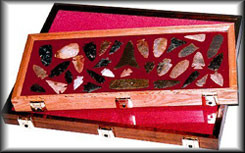
Point in case: an arrowhead displayed in a glass case in the Museum of Natural History. (practical)

Case in point: a glass case in the Museum of Natural History jammed into the tip of an arrowhead. (practical...if you've just dropped acid for the first time)

More to the point, the term "case in point" actually originates from the French term à point, meaning something relevant or to the point. In the 17th century, this resulted in one being able to use the term "in point" by itself to label something as "revelant." Over a hundred years later, a gaggle of lawyers squabbling over precedents demanded that some cases be produced to prove relevance. Thus, a case in point. Or as some call it, the birth of literary confusion and an over-litigious society.
Average: 4 (1 vote)

10 Comments

 Bunni's picture

Did you have to confuse me so early in the morning??

 Nathan's picture

I always wondered why you picked that name for your old column and then the site. In this case however, I think I would have preferred the mystery. Perhaps if you used visual aids...

 Court's picture

As I used to write, my actual thought process behind the term is "here are some POINTS to consider, IN CASE this ever happens to you."

This post merely describes the official etymology of the term. Also, I would like to get higher in Google rankings for the term "case in point," for those confused people who go searching.

 Ashlyn's picture

the funny thing is, when I first discovered this site, my buddy was like, "Hey, this website published an article I wrote. Go to Caseinpoint.com and check it out," and it took like forever to figure out what the hell website he was actually published on.

 Anonymous's picture

A friend of mine is called 'Cees'.
It's a Dutch name that is pronounced pretty much the same as the English word 'case'.
A 'point in case' would take a somewhat painful twist, where he is concerned.

wim
(www.wimdows.nl)

 Dan's picture

Hey cool, I've actually thought about this before too and have come to the same conclusion!

 Dan's picture

Okay so here's an update :-)

Hmmm.... maybe another way to think of it is that the cases are encapsulated by the point.

"The point I'm trying to make here is that watching too much TV can have negative effects on my general well-being" -- There's the point.

Cases:
1. I was late to work because I watched to much TV the night before.
2. I didn't eat dinner because I was busy watching TV.
3. I watched TV for a week straight without sleeping and now I'm blind.

So each case fits in or is encapsulated by the point.

Otherwise the point is illustrated by the case.

This whole concept bothers me too... I thought for sure I had it figured out a while back, people must be wrong and it just has to be "point in case." I finally began writing about it today, and now I'm leaning back toward the convention.

I may never get the point, but in any case I'm probably thinking about it too much...

 Anonymous's picture

'Case in point' is similar to saying 'in a nutshell'.

The point made having succinctly illustrated the entire case.

 Anonymous's picture

a case in point - the word case is in reference to the story, episode, or example being used as a point. In point is in reference to that case being used as a point for ones orginal argument.

EX: This story is a case in point on how some people do not understand word usage.

The story is a case highlighting the fact that the righter does not understand the other usages of the word case. It is in point to how people do not understand general word usage.

Think of case as the detective or crime case, the instance of events that pretain to a single overall idea, theme, or point and not the brief case.

case1 /ke?s/ Pronunciation Key - Show Spelled Pronunciation[keys] Pronunciation Key - Show IPA Pronunciation
–noun
1. an instance of the occurrence, existence, etc., of something: Sailing in such a storm was a case of poor judgment.
2. the actual state of things: That is not the case.
3. a question or problem of moral conduct; matter: a case of conscience.
4. situation; circumstance; plight: Mine is a sad case.
5. a person or thing whose plight or situation calls for attention: This family is a hardship case.
6. a specific occurrence or matter requiring discussion, decision, or investigation, as by officials or law-enforcement authorities: The police studied the case of the missing jewels.
7. a stated argument used to support a viewpoint: He presented a strong case against the proposed law.
8. an instance of disease, injury, etc., requiring medical or surgical attention or treatment; individual affliction: She had a severe case of chicken pox.
9. a medical or surgical patient.
10. Law.
a. a suit or action at law; cause.
b. a set of facts giving rise to a legal claim, or to a defense to a legal claim.
11. Grammar.
a. a category in the inflection of nouns, pronouns, and adjectives, noting the syntactic relation of these words to other words in the sentence, indicated by the form or the position of the words.
b. a set of such categories in a particular language.
c. the meaning of or the meaning typical of such a category.
d. such categories or their meanings collectively.
12. Informal. a peculiar or unusual person: He's a case.

 Daniel's picture

This post has been removed by the author.

Post new comment

The content of this field is kept private and will not be shown publicly.
  • Allowed HTML tags: <a> <strong> <em> <ul> <ol> <li> <img> <p> <br> <hr>
  • Lines and paragraphs break automatically.

More information about formatting options

8 + 5 =
Solve this simple math problem and enter the result. E.g. for 1+3, enter 4.